The ultraviolet index across Israel reached 11 and above this week, the top of the World Health Organization’s scale, and the Israel Meteorological Service told the public to stay out of direct sun during peak hours. At that level the advice is not about comfort. It is about how fast skin damage starts, which on a bright coastal afternoon is measured in minutes rather than hours.
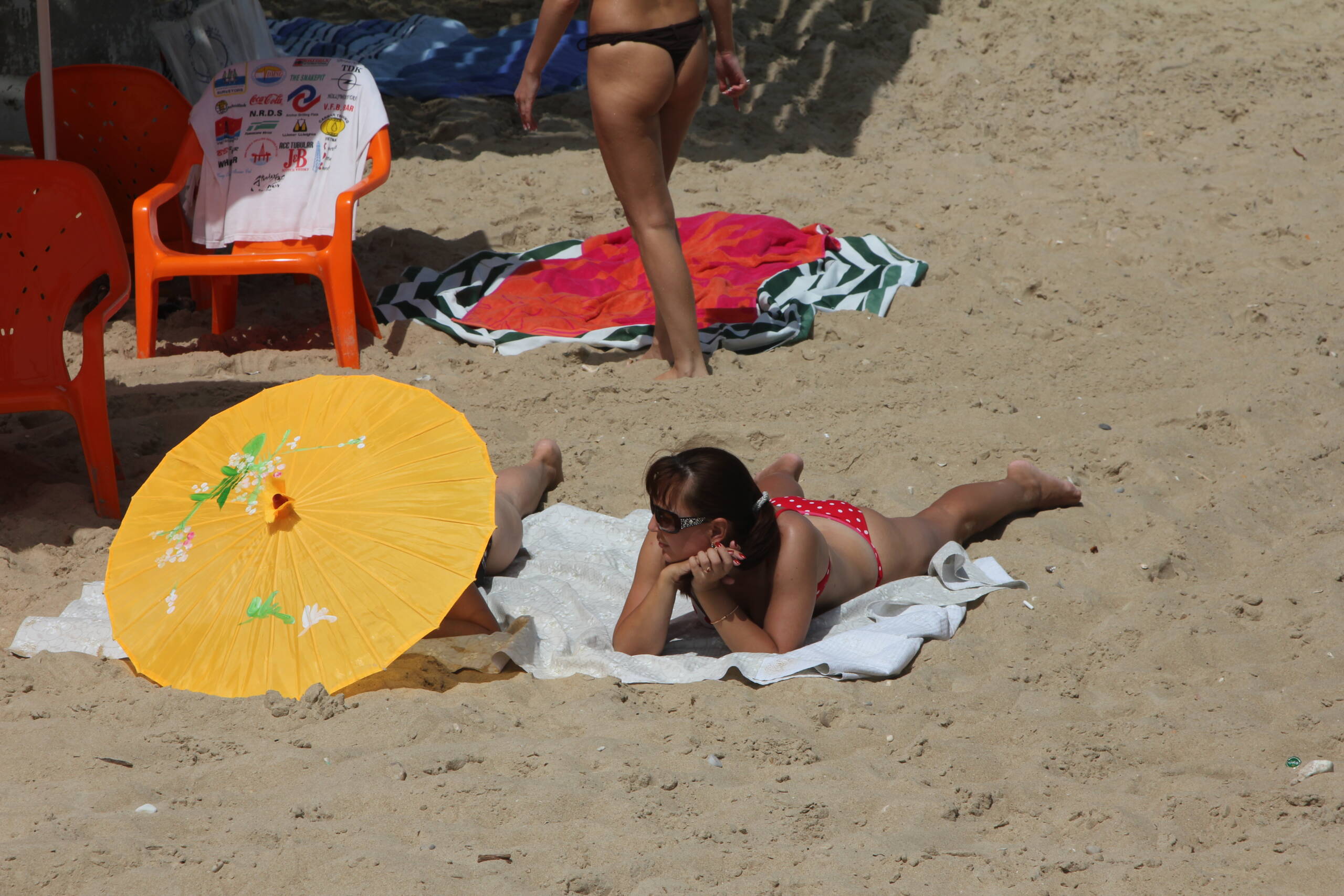
The index is a calculated forecast, not a thermometer reading. It combines sun angle, ozone thickness, altitude and cloud cover into a single number that estimates how much biologically damaging radiation is hitting a horizontal surface. Anything from 11 up is classed as extreme, and the standard guidance at that point is blunt: avoid being outside in the middle of the day, and treat shade, clothing and sunscreen as three separate requirements rather than alternatives.
Why the beach is the worst place to test it
Sand is a reflector. A pale dry beach bounces a meaningful share of incoming ultraviolet back upward, which means a person lying on a towel is taking radiation from above and from the sand around them at the same time. Water adds more. This is why people burn on beaches at levels that would leave them fine in a park, and why the shaded side of an umbrella is not the safe zone it looks like.
Umbrellas and parasols block the direct beam and very little else. Scattered light from open sky arrives from every angle, and reflected light comes in low and sideways, under the canopy edge, onto the underside of arms and chin. A decorative paper parasol of the kind that photographs beautifully on a beach is close to useless as protection. Dermatology research comparing umbrella-only shade against high-factor sunscreen has repeatedly found that people relying on the umbrella still burn.
What the peak hours actually mean
The window the service is talking about runs roughly from ten in the morning to four in the afternoon, when the sun is high enough that radiation takes the shortest path through the atmosphere. Outside that window the same sky can deliver a fraction of the dose. The practical consequence for anyone spending August on the coast is that the early morning and the late afternoon are not the boring parts of a beach day. They are the parts where the arithmetic works in your favour.
Heat is a poor guide here. A sea breeze makes an extreme UV afternoon feel mild, and cloud cover reduces the index far less than people assume, since thin or broken cloud lets most ultraviolet through and can scatter additional radiation downward. The number does not track how hot it feels.
The gap between the warning and the beach
Israel has among the higher skin cancer rates in the world, a long summer, a population that spends it outdoors, and a national forecasting service that publishes an hourly UV figure that almost nobody checks before leaving the house. The advisory is not new information. It is the same advisory issued every summer, competing with a hot Saturday and a free afternoon.
The forecast is public and updates hourly. Reading it takes ten seconds, which is less time than an unprotected shoulder needs at index 11.