Haifa made sporting history on Friday, November 20, 2026, as around 10,000 runners took part in the city’s first international marathon. From the early morning start near Dado Beach to the final kilometers along the coastal course, the event brought competitive athletes, recreational runners, families and supporters together for a landmark day in northern Israel.
The inaugural event offered six distances, from the classic 42.195-kilometer marathon and 21.1-kilometer half marathon to 10 km, 5 km, 2.5 km and a one-kilometer race for schoolchildren. The full marathon started at 6:15 a.m., setting the pace for a morning that turned sections of Haifa into a running course. More than a competition, it was an ambitious attempt to establish a new annual sporting tradition in a city better known for its Mediterranean coastline, steep hills and busy port.
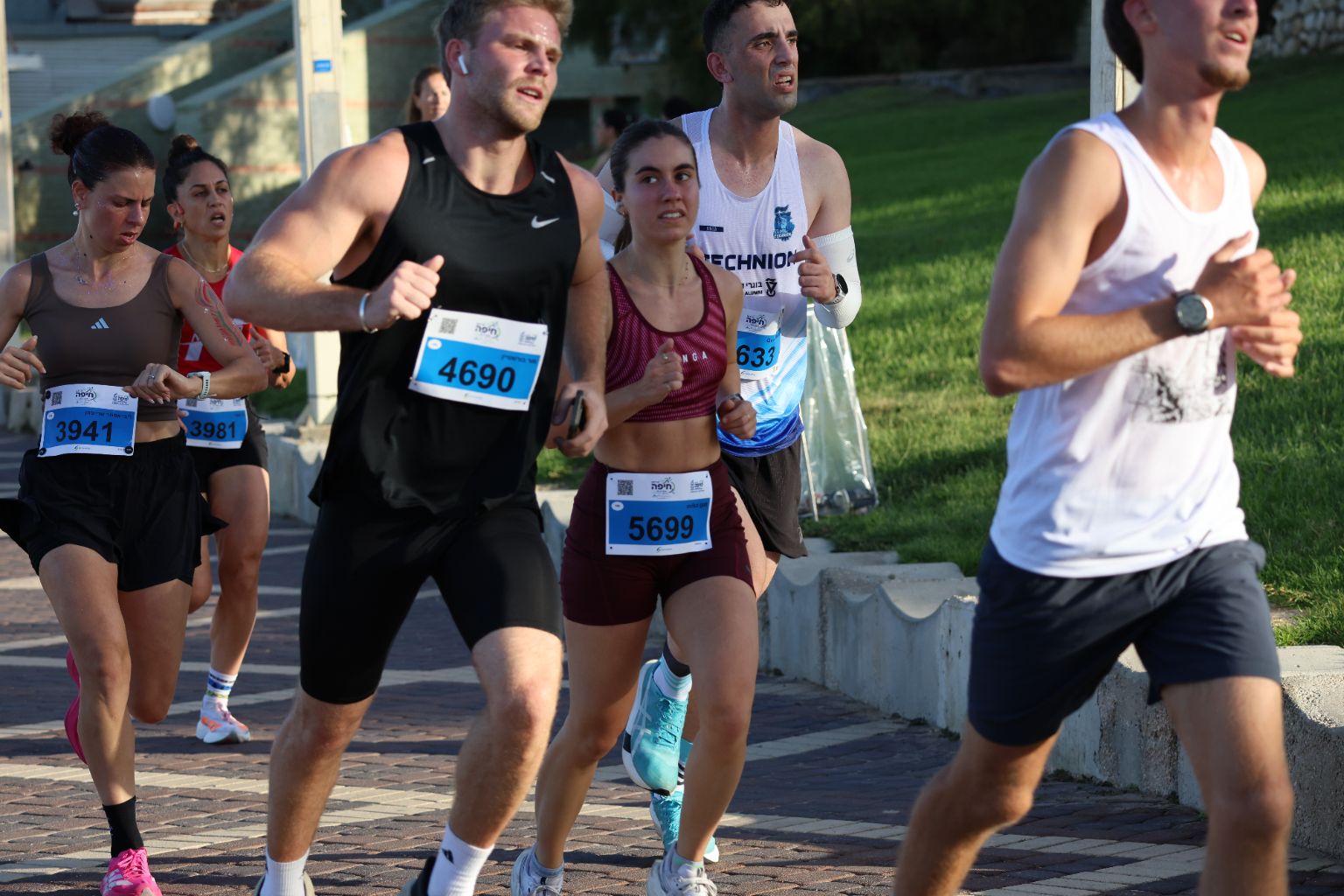
The photograph from today’s race captures the distinctly human side of the event. A group of runners moves closely together over a paved stretch of the course, each seemingly absorbed in a different moment of effort. A runner in a black sleeveless top dominates the foreground, with competitors in burgundy, white and dark athletic clothing keeping pace nearby. Some glance sideways, others concentrate on the road ahead; the low sunlight picks out their faces and shoulders while a grassy embankment rises beyond the route. It is the kind of scene that makes a major road race feel immediate and personal, far beyond the finish-line statistics.
Yet the real achievement of the day extended well beyond race times and medals. The Haifa Marathon was also a social and family occasion, a reason for people of different ages to come out together, cheer each other on and enjoy the city in a different way. The shorter races, including a one-kilometer event for schoolchildren, made participation possible well beyond the ranks of serious distance runners. Families, friends and running partners were part of the story, not merely spectators to it.
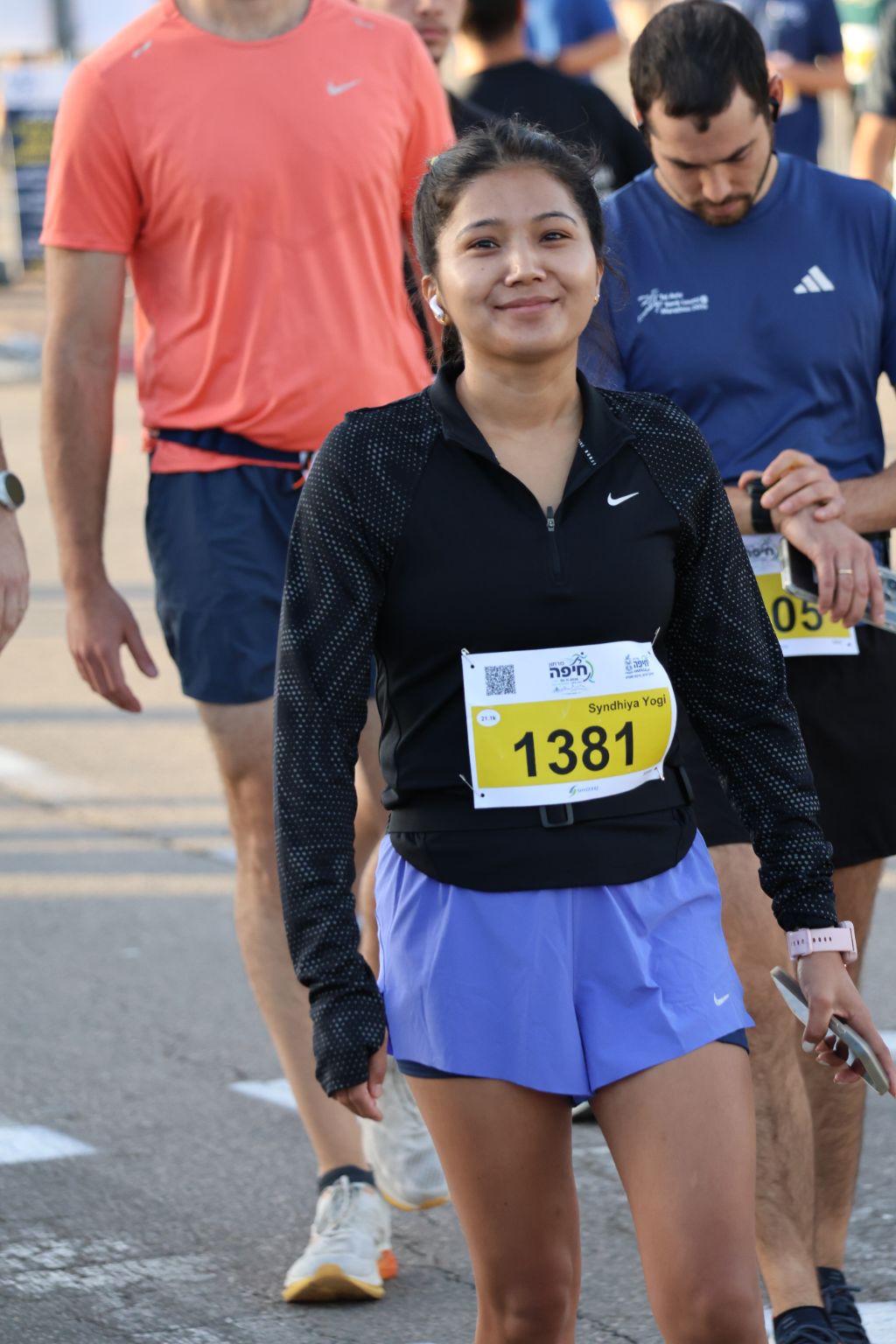
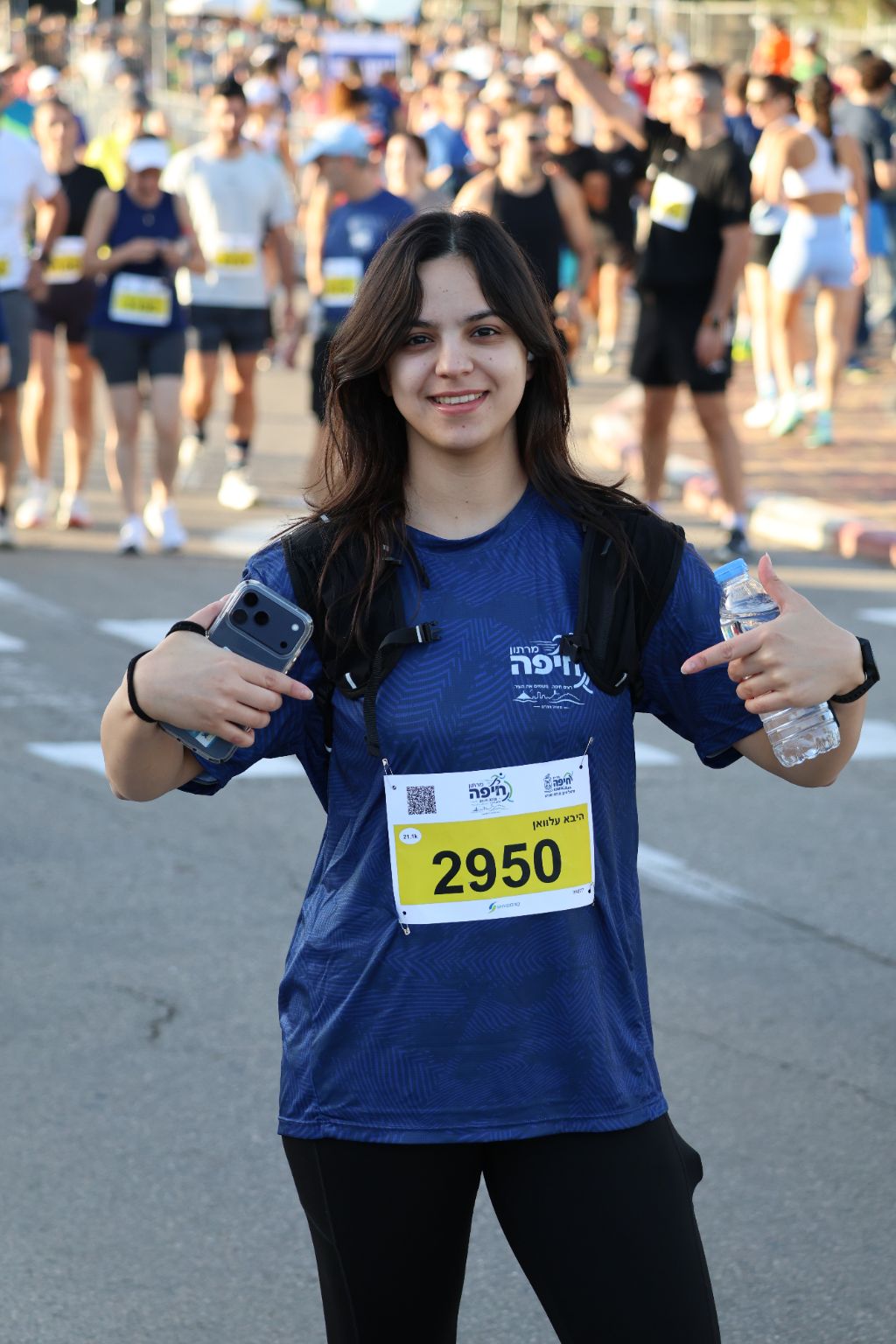
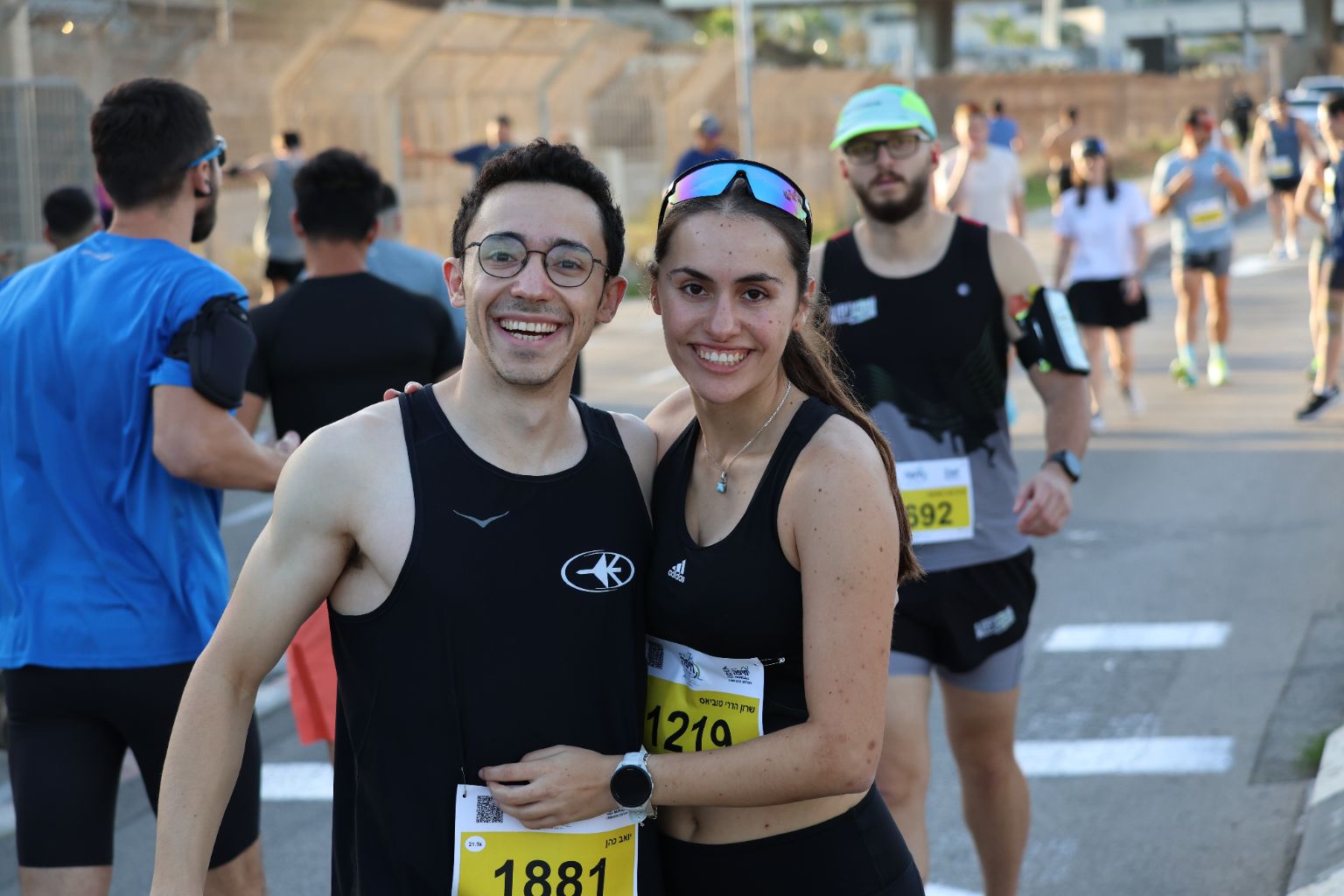
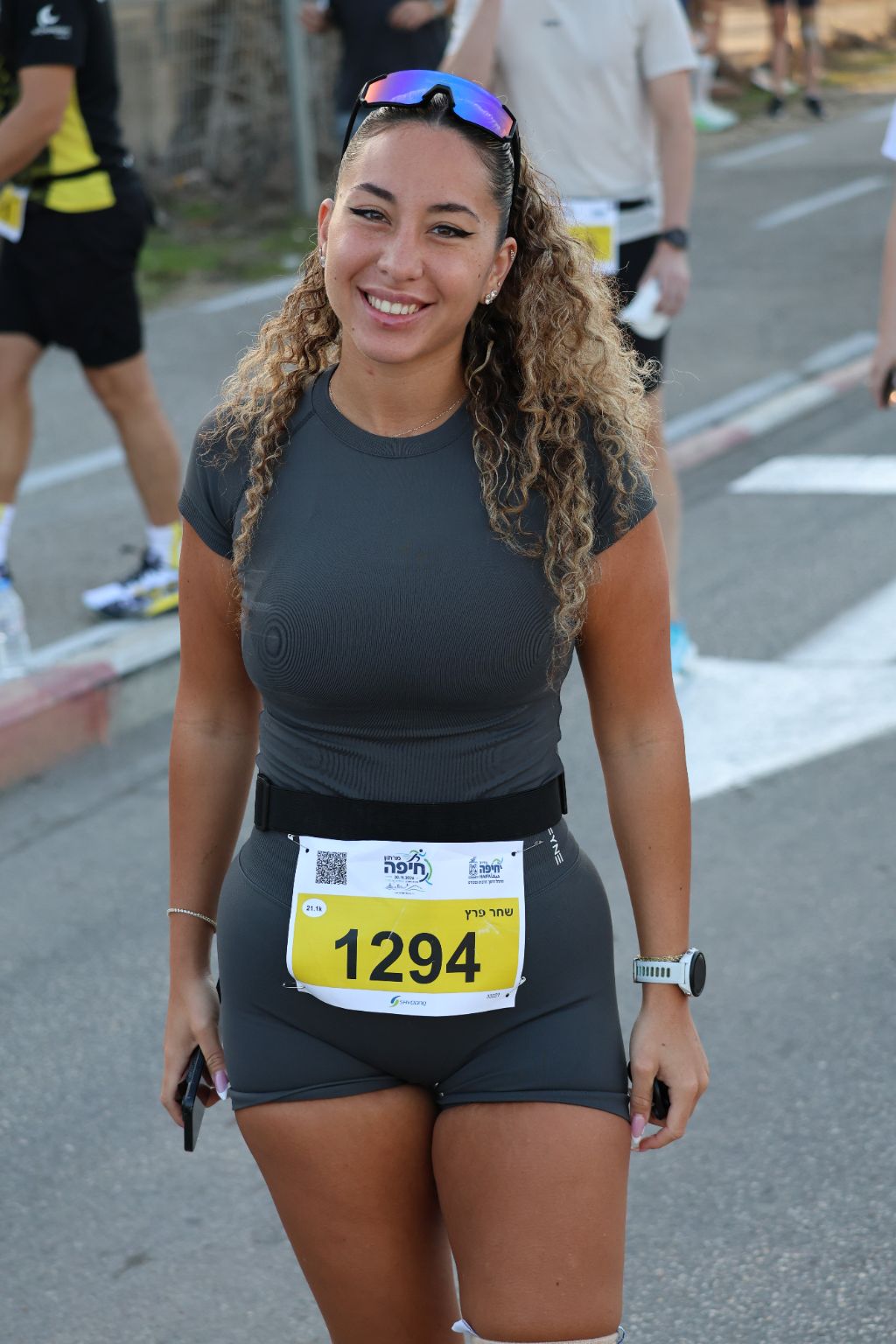
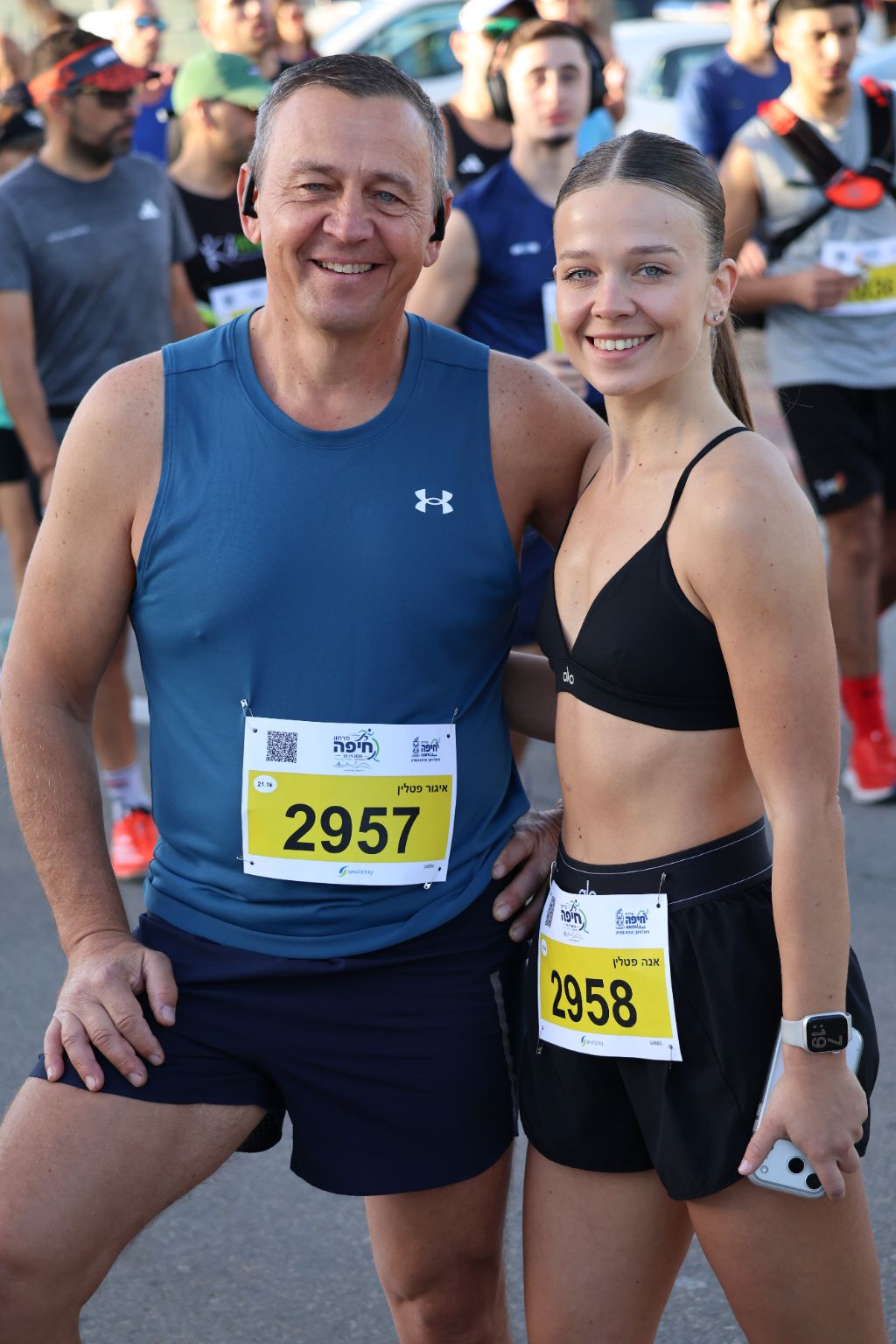
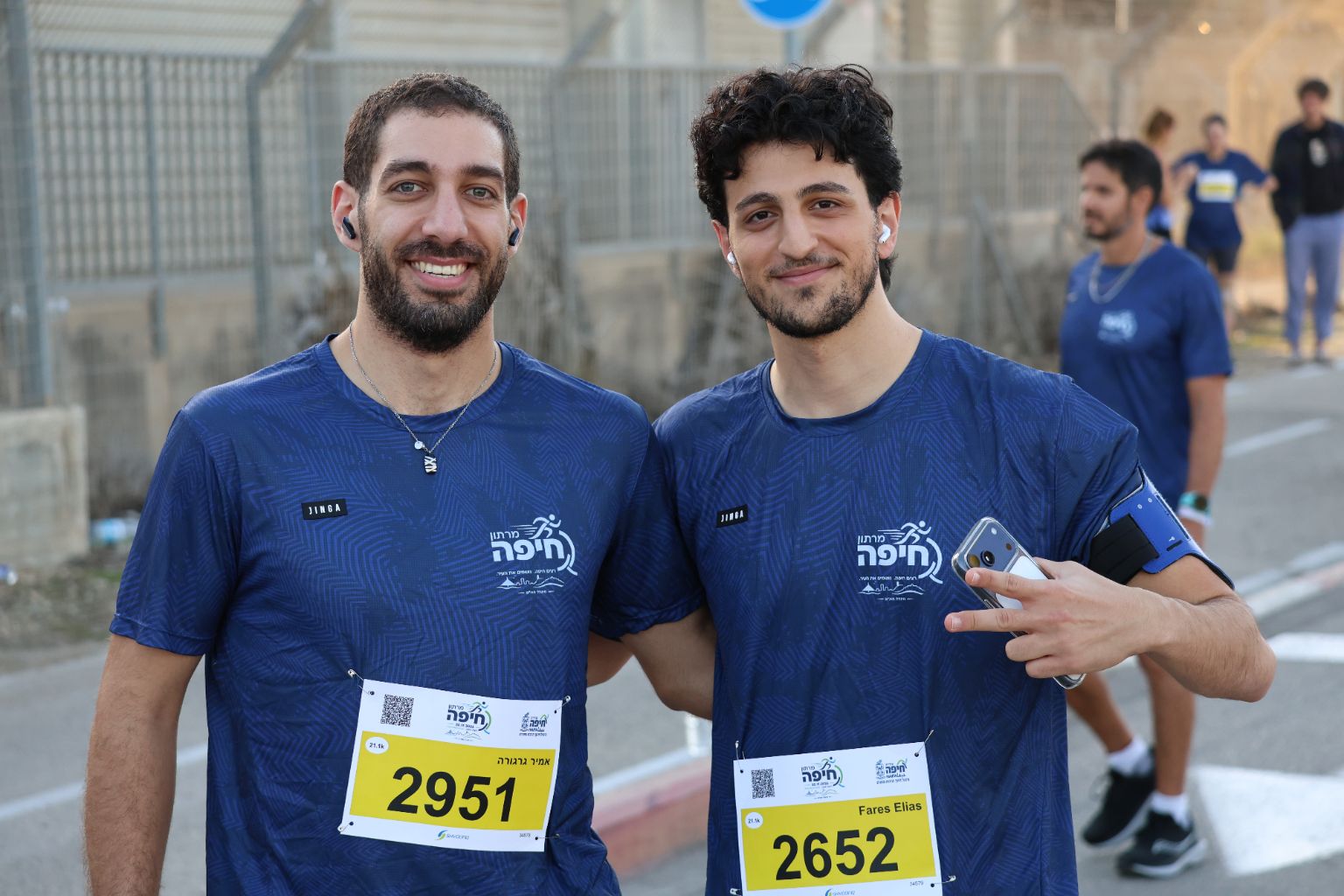
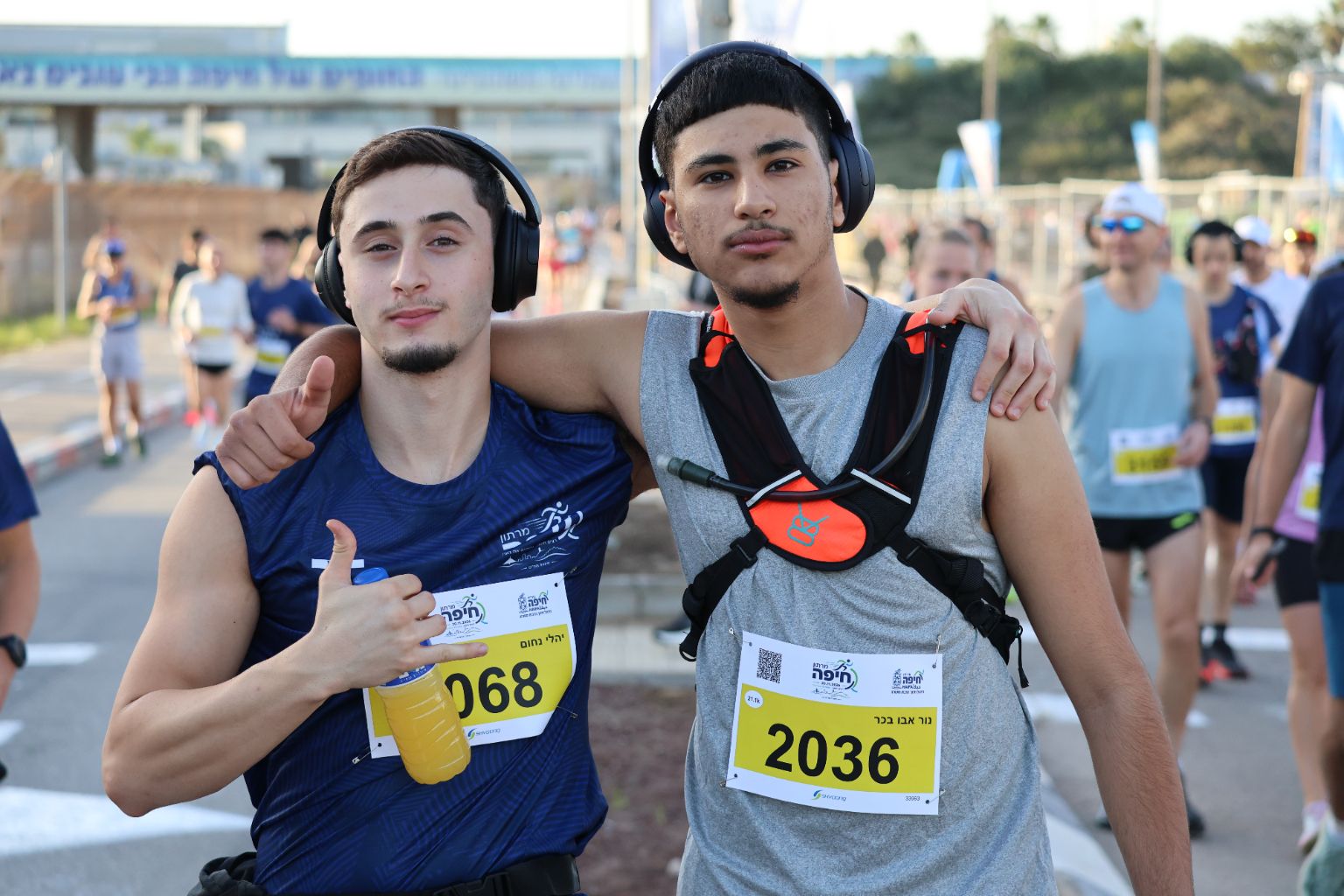
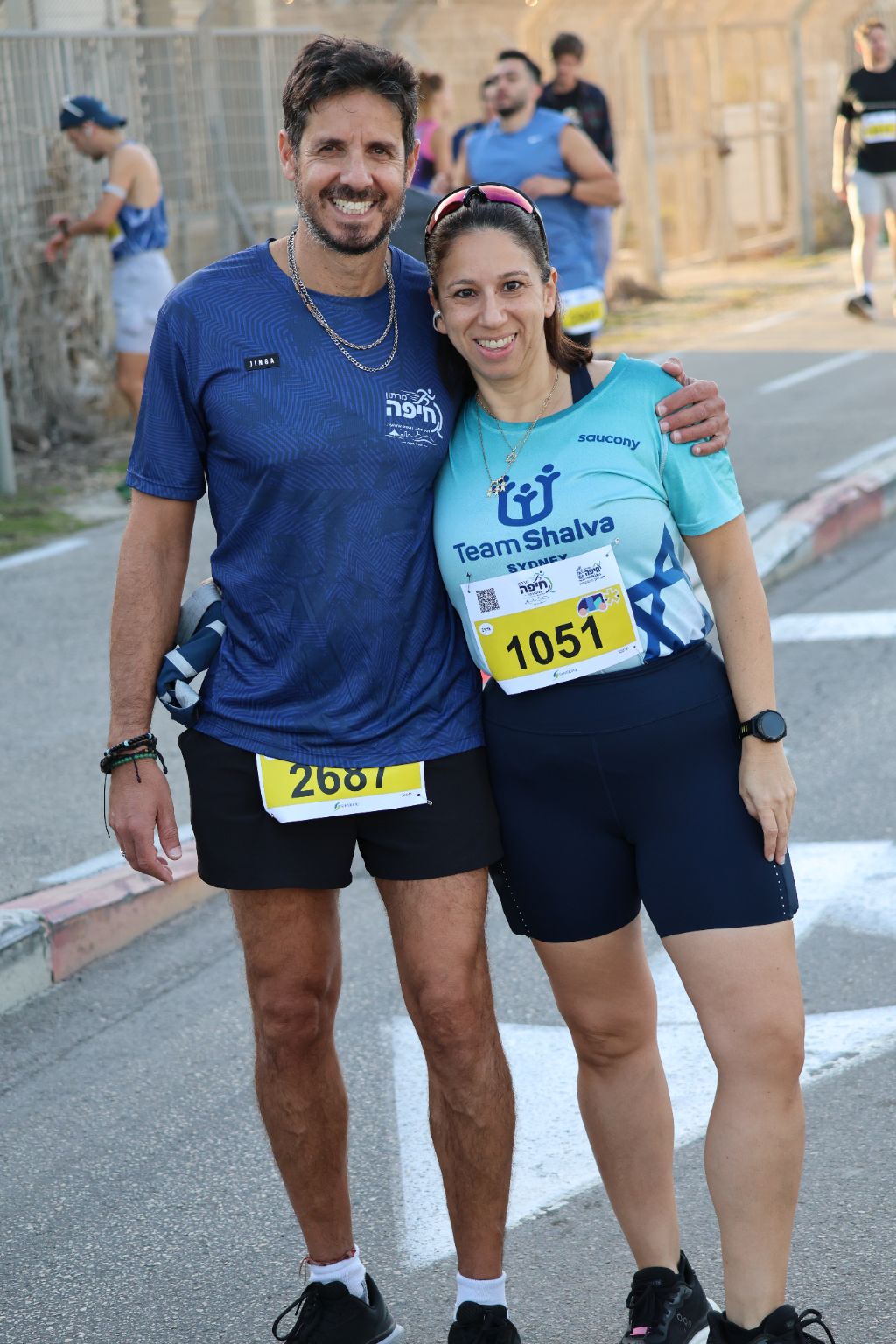
That atmosphere comes through in these eight additional photographs from the event. Some runners smile alone for the camera, while others pose in pairs, with arms around shoulders or matching event shirts. There are relaxed gestures, water bottles and earphones, and even a Team Shalva shirt among the participants. These are the moments between the kilometers: meeting up, sharing an experience and making memories. The images offer a reminder that a city marathon is valuable not only for athletic competition or tourism, but for bringing people together in public space.
Those statistics nevertheless produced historic first winners. South Sudanese runner Lotino Luchik took the men’s full-marathon title in 2 hours, 17 minutes and 31 seconds, establishing the first course record. Kenya’s Teresia Omosa won the women’s marathon in 2:34:53. In the half marathon, Israeli Olympian Aymeru Almiya finished first among the men in 1:05:48, while Mentamer Bikaya won the women’s race in 1:21:38, according to results reported by race organizer Shvoong.
The scale of the event was notable not only for the number of entrants but for the mix of people participating. Alongside elite competitors were community teams and groups connected with the rehabilitation of wounded soldiers, terror victims and people with disabilities. Their presence gave the marathon a broader dimension, connecting sport with resilience, recovery and participation in public life. Haifa Mayor Yona Yahav described it as a historic morning for the city and praised the runners, volunteers, emergency services and organizations involved.
There was, inevitably, a practical cost to turning major streets into a racecourse. Road closures and changes to traffic arrangements affected parts of Haifa during the morning, with the city arranging special transport information for participants and residents. But the crowds, the range of race distances and the atmosphere on the course showed the appeal of an event that could become an annual fixture.
Organizers are already looking ahead. The next Haifa Marathon is scheduled for November 19, 2027, with plans to move the start, finish and event complex to Sammy Ofer Stadium to accommodate greater participation. If the first edition is any indication, Haifa has found a promising new way to showcase the city: not simply as a place to visit, but as a place to run through, one kilometer at a time.