The Israeli Grain Importers Association announced Wednesday that Zenziper, one of Israel’s largest wheat importers, will be forced to reject the Russian cargo vessel currently waiting in Haifa Bay — the Panormitis — which Kyiv has accused of carrying grain plundered from Russian-occupied Ukrainian territories. The association said the Russian supplier will be compelled to redirect the shipment to another port.
The move marks a notable inflection point. Up to this moment, the Israeli government’s response had been bureaucratic deflection: Foreign Minister Gideon Sa’ar dismissed Zelenskyy’s public warnings as “Twitter diplomacy,” insisted that allegations are not evidence, and claimed no formal legal assistance request had been submitted — a claim Ukraine disputed by pointing to months of prior diplomatic contact. The industry association has now acted where the government stalled.
The Panormitis, a Panama-flagged bulk carrier, entered Haifa Bay on April 26 carrying an estimated 6,200 tonnes of wheat and 19,000 tonnes of barley. According to Ukrainian investigative journalist Kateryna Yaresko of the SeaKrime project, the vessel originated from the Port of Kavkaz in Russia’s Krasnodar Krai and took on its cargo via ship-to-ship transfers from other vessels — a method Ukraine says is routinely used to obscure the grain’s origin in Russian-occupied Ukrainian regions. The vessel’s Greece-based management company denied the cargo came from occupied territory.
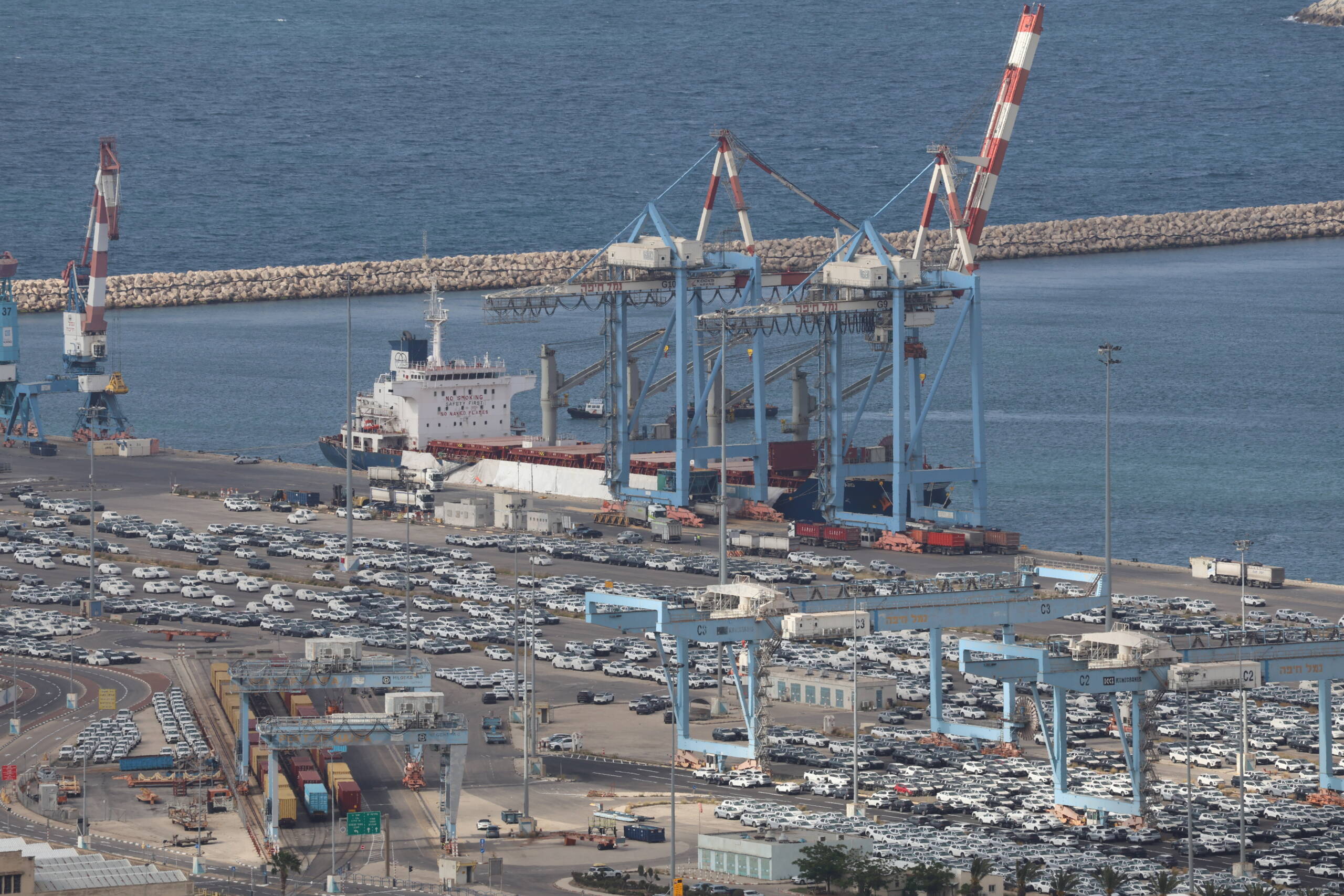
This was not an isolated incident. It was not even the first this month. The Russian bulk carrier Abinsk docked in Haifa in early April and unloaded nearly 44,000 tonnes of stolen Ukrainian wheat. Israel’s explanation at the time: too late to turn it around. An investigation by Haaretz, published days before the *Panormitis* confrontation escalated publicly, found that at least four such shipments have been unloaded in Israel in 2026 alone, and more than thirty since 2023. The pattern is systematic, not incidental.
The diplomatic fallout has been swift and multilateral. Ukraine summoned Israel’s ambassador, Michael Brodsky, and delivered a formal protest note. Zelenskyy threatened sanctions against individuals and companies profiting from the trade. The European Union warned it was prepared to list third-country entities — including Israeli ones — that help fund Russia’s war effort through the purchase of looted agricultural goods. The EU’s position is unambiguous: buying stolen grain is sanctions circumvention by another name.
Israel’s posture in this conflict has always been one of managed ambiguity — refusing to arm Ukraine, maintaining back-channel ties with Moscow, and citing the security of the Jewish community in Russia as a constraint on full alignment with the West. That calculus has costs. Allowing Russia’s plunder pipeline to flow through Haifa, whether by commission or willful inattention, is a reputational and diplomatic liability that grows heavier with each ship that docks.
Zenziper’s rejection of the Panormitis cargo under industry association pressure is a de facto acknowledgment that the grain trade has become politically untenable. The Russian supplier now needs a new port. The more durable question is whether Israel’s government will move from reactive industry pressure to proactive policy — or wait for the next ship to arrive and repeat the cycle.